
Introduction
Managing a manufacturing business involves multiple activities at the same time. From purchasing raw materials and managing inventory to production planning, sales, accounting, customer management, and order fulfillment, every process needs to work together.
When these operations are managed using spreadsheets, paper records, or different disconnected software, businesses can face data errors, inventory problems, production delays, duplicate work, and difficulty tracking overall performance.
This is where the Best ERP Software for Manufacturing Businesses can make a major difference.
ERP software brings different business operations together on one centralized platform. Instead of managing accounting, inventory, purchasing, sales, production, and customer information separately, manufacturers can manage these processes through an integrated ERP system.
The Best ERP Software for Manufacturing Businesses is designed to improve operational efficiency, reduce manual work, provide better visibility, and help business owners make informed decisions.
But what makes an ERP solution suitable for a manufacturing company?
In this guide, we will discuss the 10 most important features of the Best ERP Software for Manufacturing Businesses and explain how these features can help manufacturing companies improve efficiency and achieve sustainable business growth.
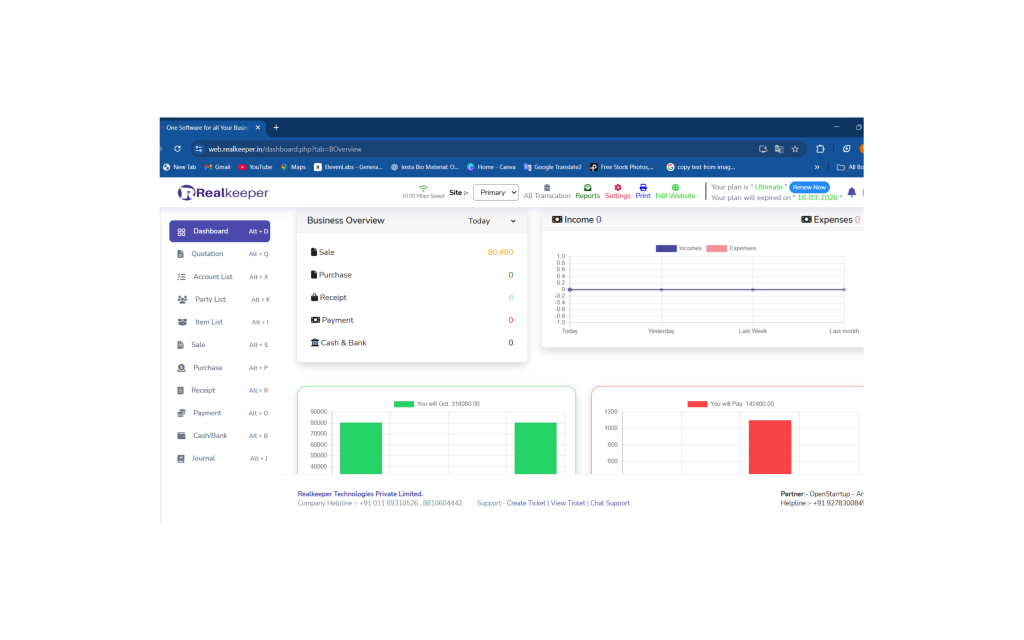
What Is ERP Software for Manufacturing Businesses?
ERP stands for Enterprise Resource Planning. ERP software is a centralized business management solution that connects different departments and processes within an organization.
For manufacturing companies, ERP software can manage important operations such as:
- Production planning
- Inventory management
- Purchasing
- Sales
- Accounting
- Customer management
- Supplier management
- Order management
- Employee tasks
- Business reporting
The Best ERP Software for Manufacturing Businesses allows companies to access important business information from one centralized system.
For example, when a customer places an order, the ERP system can help the business check product availability, review inventory, identify material requirements, plan production, create invoices, and track payments.
This connected approach makes ERP Software for Manufacturing Businesses an important technology for companies that want to improve productivity and manage growth more effectively.
10 Key Features of the Best ERP Software for Manufacturing Businesses
1. Production Planning and Management
Production is one of the most important areas of a manufacturing company. Poor production planning can result in delayed orders, unused resources, increased costs, and customer dissatisfaction.
The Best ERP Software for Manufacturing Businesses should provide powerful production planning and management capabilities.
Manufacturing ERP software can help businesses plan production according to customer orders, available inventory, production capacity, raw material availability, and deadlines.
Important production management features include:
- Production order management
- Work order management
- Production scheduling
- Material requirements planning
- Production status tracking
- Resource allocation
- Manufacturing cost tracking
- Production reports
With the Best ERP Software for Manufacturing Businesses, managers can get better visibility into the production process.
They can understand what needs to be produced, which materials are required, what production activities are pending, and whether orders are progressing according to schedule.
This can help manufacturing businesses reduce production delays and improve overall productivity.
2. Inventory and Stock Management
Inventory management is another critical requirement for every manufacturing business.
Manufacturers need enough raw materials to keep production running while avoiding excessive inventory that can increase storage costs.
The Best ERP Software for Manufacturing Businesses should provide real-time inventory visibility across different products and materials.
A manufacturing ERP system can help track:
- Raw materials
- Finished products
- Work-in-progress inventory
- Stock transfers
- Stock adjustments
- Warehouse inventory
- Minimum stock levels
- Purchase requirements
With ERP Software for Manufacturing Businesses, managers can quickly check stock availability and identify potential shortages.
For example, when a raw material reaches its minimum stock level, the ERP system can help management identify the requirement and initiate the purchasing process.
Better inventory control can reduce stock shortages, prevent overstocking, minimize waste, and improve warehouse efficiency.
3. Integrated Accounting and Financial Management
Financial management is an essential part of manufacturing operations.
Manufacturing businesses regularly handle sales invoices, purchase bills, expenses, supplier payments, customer payments, taxes, and other financial transactions.
Managing these activities separately can increase manual work and create data inconsistencies.
The Best ERP Software for Manufacturing Businesses should integrate accounting with inventory, sales, purchasing, and other business operations.
Important accounting features can include:
- Sales invoicing
- Purchase management
- Expense tracking
- Accounts receivable
- Accounts payable
- Payment tracking
- Tax management
- Financial reports
- Profit and loss reports
When accounting and operational information are connected, business owners can get a clearer view of their financial performance.
This makes ERP for Manufacturing Businesses particularly useful for companies that want to improve financial control while managing their daily operations from one platform.
4. Purchase and Supplier Management
Manufacturers depend on suppliers for raw materials, components, packaging materials, machinery requirements, and other resources.
Managing supplier information manually can make it difficult to track purchase orders, prices, payments, and delivery schedules.
The Best ERP Software for Manufacturing Businesses should include centralized purchasing and supplier management.
A good ERP system can help manufacturers manage:
- Supplier information
- Purchase quotations
- Purchase orders
- Material requirements
- Supplier payments
- Purchase history
- Supplier performance
- Purchase costs
With Manufacturing ERP Software, purchasing teams can maintain organized supplier records and easily review previous purchases.
Businesses can also compare suppliers and purchasing costs to make better procurement decisions.
Efficient purchase management can help manufacturers control costs while ensuring that the right materials are available when required.
5. Sales and Order Management
Sales management is directly connected to production and inventory in a manufacturing business.
When a customer places an order, the sales team needs to know whether products are available or whether additional production is required.
The Best ERP Software for Manufacturing Businesses can connect sales orders with inventory, production, and accounting.
A sales management module can help manage:
- Customer inquiries
- Quotations
- Sales orders
- Product availability
- Order status
- Sales invoices
- Customer payments
- Sales history
With ERP Software for Manufacturing Businesses, sales teams can access important customer and order information without depending on multiple spreadsheets or departments.
This improves coordination between sales, production, inventory, and accounting teams.
6. CRM and Customer Relationship Management
Manufacturing companies need to manage customer relationships just as carefully as they manage production.
A CRM module helps businesses store customer information, sales history, communication records, follow-ups, complaints, and other important details.
The Best ERP Software for Manufacturing Businesses should ideally include CRM functionality or provide easy CRM integration.
Useful CRM features include:
- Customer database
- Lead management
- Customer follow-ups
- Sales pipeline
- Communication tracking
- Complaint management
- Customer purchase history
- Task management
- Reminders
When CRM and ERP functions are connected, employees can get a complete view of the customer.
For example, sales teams can see previous orders while customer support teams can review complaints and communication history.
This makes ERP for Manufacturing Businesses useful not only for internal operations but also for improving customer service.
7. GST Billing and Tax Management
For Indian manufacturing companies, GST billing and tax management are important parts of business operations.
Creating invoices manually can increase the chances of incorrect calculations, duplicate entries, and record-keeping problems.
The Best ERP Software for Manufacturing Businesses should offer suitable GST billing and financial management features.
Depending on the ERP solution, businesses may get features such as:
- GST invoices
- Tax calculations
- HSN/SAC management
- E-Invoice support
- E-Way Bill support
- Tax reports
- Purchase tax records
- Sales tax records
An integrated ERP system can connect billing with accounting and inventory, reducing repetitive data entry.
For Indian manufacturers, GST-related capabilities can therefore be an important factor when comparing the Best ERP Software for Manufacturing Businesses.
Businesses should always verify the current tax and compliance capabilities of an ERP before implementation.
8. Real-Time Reports and Business Analytics
Business data becomes valuable when it can be converted into useful information.
Manufacturing business owners need to understand sales performance, inventory levels, production status, purchasing costs, outstanding payments, and profitability.
The Best ERP Software for Manufacturing Businesses should provide useful reports and dashboards.
Common ERP reports include:
- Sales reports
- Purchase reports
- Inventory reports
- Production reports
- Expense reports
- Outstanding payment reports
- Customer reports
- Supplier reports
- Profitability reports
Real-time reports can help managers identify problems faster.
For example, if inventory costs are increasing, management can review purchasing patterns and stock levels before the issue significantly affects profitability.
This data-driven approach is one of the major advantages of modern Manufacturing ERP Software.
9. Employee and Task Management
Manufacturing companies often have multiple teams working on different activities.
Without proper task management, important follow-ups can be missed and responsibilities can become unclear.
The Best ERP Software for Manufacturing Businesses can help businesses assign tasks and monitor their progress.
Useful task management features include:
- Task assignment
- Employee responsibilities
- Follow-up reminders
- To-do lists
- Task status
- Internal notes
- Team coordination
- Workflow management
With ERP Software for Manufacturing Businesses, managers can improve visibility into team activities and follow-ups.
This can help reduce communication gaps and improve employee accountability.
For growing manufacturing companies, task management can become especially valuable because the number of employees, customers, suppliers, and daily activities continues to increase.
10. Scalability, Security, and Integration
An ERP system is a long-term investment. Therefore, businesses should choose software that can support future growth.
The Best ERP Software for Manufacturing Businesses should be scalable enough to handle increasing customers, products, employees, transactions, and business locations.
Important considerations include:
- Cloud or on-premise deployment
- User management
- Role-based permissions
- Data security
- Backup
- Third-party integrations
- API support
- Multi-user access
- Multi-branch support
- Scalability
Security is particularly important because an ERP system may contain sensitive information related to customers, suppliers, employees, accounting, sales, and business operations.
When comparing the Best ERP Software for Manufacturing Businesses, companies should evaluate security controls, user permissions, backups, integrations, and data protection.
Benefits of Using the Best ERP Software for Manufacturing Businesses
Choosing the Best ERP Software for Manufacturing Businesses can provide several advantages.
Improved Operational Efficiency
ERP software can connect departments and automate repetitive activities. This reduces manual work and allows employees to focus on more important tasks.
Better Inventory Control
Manufacturers can monitor raw materials, finished goods, and stock movements from a centralized system.
Reduced Data Errors
Centralized data reduces duplicate entries and inconsistencies caused by maintaining information in different systems.
Faster Decision-Making
Real-time reports provide management with useful information for making better business decisions.
Better Customer Service
Sales and customer teams can access customer information, order history, follow-ups, and payment information more easily.
Improved Business Visibility
Management can get a broader view of production, inventory, purchasing, sales, accounting, and customer activities.
Easier Business Growth
The right ERP Software for Manufacturing Businesses can provide a structured technology foundation that supports business expansion.
How to Choose the Best ERP Software for Manufacturing Businesses
Choosing an ERP should not be based only on the number of features.
Every manufacturing company has different processes and requirements.
Before selecting the Best ERP Software for Manufacturing Businesses, consider these factors:
1. Identify Your Business Requirements
First, identify your biggest operational challenges. These could include inventory management, production planning, accounting, sales, purchasing, or customer management.
2. Evaluate Manufacturing Features
Make sure the ERP supports the production and inventory processes used by your company.
3. Check Ease of Use
Employees should be able to understand and use the system without unnecessary complexity.
4. Consider Scalability
Choose an ERP that can support your business as customers, products, employees, and transactions increase.
5. Check Integration Capabilities
Your ERP may need to integrate with payment systems, CRM platforms, e-commerce websites, communication tools, or other applications.
6. Evaluate Customer Support
Implementation and employee training are important. Choose a provider that offers appropriate support and training.
7. Compare Total Cost
Consider not only the software price but also implementation, customization, training, integrations, maintenance, and future upgrades.
Why Manufacturing Businesses Are Moving Toward ERP
As manufacturing businesses grow, managing operations through spreadsheets and disconnected applications becomes increasingly difficult.
An integrated ERP system provides a single source of business information.
Instead of checking one system for inventory, another for accounting, and another for customer information, employees can access relevant data through one platform.
The Best ERP Software for Manufacturing Businesses can therefore help organizations create connected workflows between different departments.
For example:
Sales Order → Inventory Check → Purchase/Production → Delivery → Invoice → Payment
Connecting these processes can reduce manual coordination and improve operational visibility.
Is ERP Software Suitable for Small Manufacturing Businesses?
ERP software is not limited to large enterprises.
Small and medium-sized manufacturing companies can also benefit from ERP Software for Manufacturing Businesses, particularly when they have increasing customers, inventory, employees, transactions, or operational complexity.
The important thing is to choose a solution that matches the current business requirements and can scale as the company grows.
A modular ERP can be useful because businesses can start with essential features and expand their usage as their requirements increase.
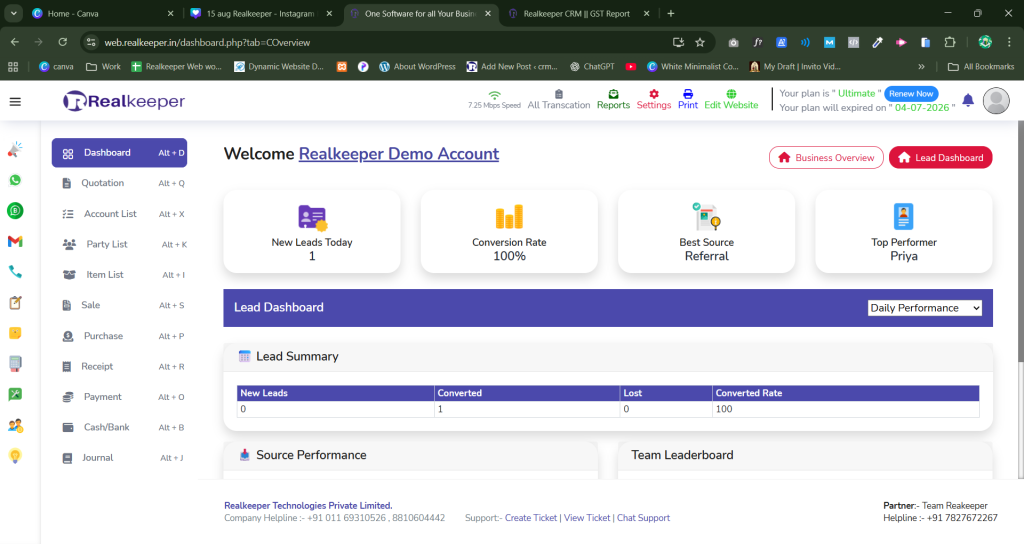
How RealKeeper Can Support Growing Businesses
For businesses searching for an integrated business management platform, RealKeeper can provide multiple business management capabilities from a centralized system.
Features such as accounting, GST billing, CRM, task management, complaint management, and other business processes can help businesses reduce dependency on disconnected tools.
For manufacturing companies, having important financial, customer, billing, and operational information available within an integrated platform can simplify everyday business management.
Before selecting any ERP, businesses should evaluate their specific production, inventory, accounting, sales, purchasing, reporting, and compliance requirements.
Final Thoughts
The Best ERP Software for Manufacturing Businesses should do more than simply store business information. It should help connect departments, automate repetitive processes, improve visibility, and support better decision-making.
Production management, inventory management, accounting, purchasing, sales, CRM, GST billing, reporting, task management, security, integration, and scalability are some of the most important features manufacturers should consider.
The Best ERP Software for Manufacturing Businesses will ultimately depend on the specific requirements, size, budget, and future goals of each company.
Before making a final decision, identify your business challenges, compare ERP solutions, request a product demonstration, evaluate implementation support, and check whether the software can grow with your organization.
With the right Manufacturing ERP Software, businesses can build more organized workflows, reduce manual processes, improve operational control, and create a stronger foundation for long-term growth.
Frequently Asked Questions
1. What is the Best ERP Software for Manufacturing Businesses?
The Best ERP Software for Manufacturing Businesses depends on the company’s size, budget, manufacturing processes, and business requirements. Important features to evaluate include production, inventory, accounting, purchasing, sales, CRM, reporting, security, and scalability.
2. What features should Manufacturing ERP Software have?
Important features include production planning, inventory management, accounting, purchasing, sales management, CRM, GST billing, reporting, task management, security, integrations, and scalability.
3. Can small businesses use ERP for manufacturing?
Yes. Small and medium-sized companies can use ERP Software for Manufacturing Businesses to manage inventory, production, accounting, purchasing, sales, and customer information more efficiently.
4. How does the Best ERP Software for Manufacturing Businesses help growth?
The Best ERP Software for Manufacturing Businesses can help automate repetitive tasks, improve inventory visibility, connect departments, reduce manual errors, generate reports, and support data-driven decisions.
5. What should I check before buying manufacturing ERP software?
Before choosing the Best ERP Software for Manufacturing Businesses, evaluate features, ease of use, scalability, integrations, security, implementation, customer support, customization options, and total cost of ownership.
6. Is cloud ERP suitable for manufacturing companies?
Cloud ERP can offer benefits such as remote access, scalability, easier updates, and reduced dependence on local infrastructure. However, businesses should evaluate security, connectivity, operational requirements, and costs before choosing a cloud-based solution.