
FMCG manufacturing is a fast-moving and highly operational business environment. Manufacturers have to manage raw materials, production, batches, finished goods, inventory, purchases, sales, accounting, GST billing, packaging, and customer orders while maintaining control over costs and stock.
When these activities are managed through spreadsheets, registers, or separate software, information can become scattered. Production teams may not have the latest inventory information, accounting teams may need to reconcile data manually, and business owners may find it difficult to get a complete picture of operations.
This is where FMCG Manufacturing Software can make a practical difference.
An integrated manufacturing system can connect production, inventory, purchasing, sales, accounting, and reporting in one workflow. RealKeeper’s manufacturing platform supports workflows covering raw-material purchase, production planning, production entry, quality control, finished goods, sales and GST invoicing.
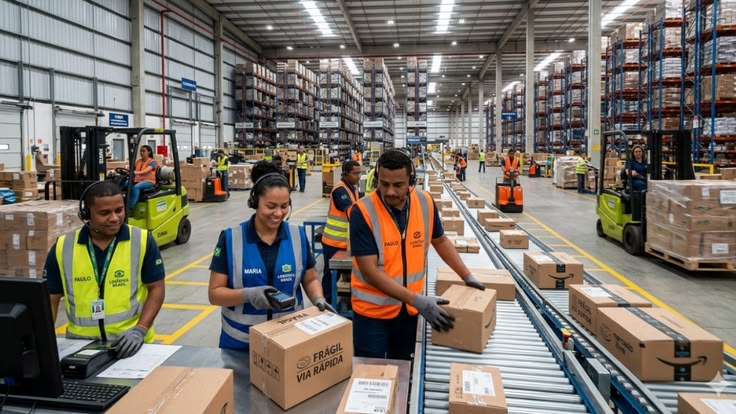
What Is FMCG Manufacturing?
FMCG manufacturing refers to the production of Fast-Moving Consumer Goods — products that are generally purchased frequently and move quickly through retail and distribution channels.
Examples can include:
- Packaged food products
- Beverages
- Personal-care products
- Household cleaning products
- Consumer-use products
- Packaged daily-use goods
Unlike some manufacturing businesses where products may remain in inventory for long periods, FMCG businesses often deal with frequent production, high stock movement, multiple product variants, and continuous replenishment.
This makes accurate inventory and production management particularly important.
For example:
Raw Materials → Production → Quality Check → Finished Goods → Packing → Sales → Customer
Managing this complete cycle through connected software can give businesses better operational visibility.
Why Do FMCG Manufacturers Need Manufacturing Software?
An FMCG manufacturer may need to track hundreds or thousands of transactions across different departments.
The business may need to answer questions such as:
- How much raw material is available?
- What is currently under production?
- How much finished stock is available?
- Which products need to be produced?
- What is the production cost?
- How much stock was purchased?
- How much product was sold?
- What payments are pending?
- What is the current profit?
- Which products are moving faster?
When these records are maintained separately, answering these questions can take additional time.
FMCG Manufacturing Software brings important operational information together, helping businesses reduce repetitive data entry and improve visibility.
7 Powerful Benefits of FMCG Manufacturing Software
1. Better Raw Material Management
Raw materials are one of the most important parts of FMCG manufacturing.
A manufacturer needs to ensure that the required materials are available before production starts. Shortages can interrupt production, while unnecessary purchases can increase inventory carrying costs.
With FMCG Manufacturing Software, businesses can organize raw-material records and connect them with production requirements.
For example:
Raw Material Purchase → Stock Entry → Production Consumption → Finished Goods
This makes it easier to understand how materials are moving through the manufacturing process.
RealKeeper’s manufacturing system supports raw-material management and connects inventory with production activities.
2. Manage BOM and Production Requirements
A Bill of Materials (BOM) defines the materials and components required to manufacture a particular product.
For FMCG manufacturers producing different products or variants, maintaining accurate BOM information can help standardize production requirements.
For example, a product may require:
- Raw material A
- Raw material B
- Packaging material
- Labels
- Additional components
A manufacturing system can keep these requirements organized.
RealKeeper supports BOM management with material mapping, quantities, units, scrap and additional-cost information.
This can help production teams understand what materials are required before manufacturing begins.
3. Improve Production Planning and Tracking
Production planning becomes more complicated when a business handles multiple products, batches, shifts, and customer orders.
Without proper tracking, manufacturers may face:
- Production delays
- Material shortages
- Excess production
- Poor coordination
- Difficulty tracking completed quantities
FMCG Manufacturing Software can help businesses organize production activities and monitor progress.
RealKeeper supports production planning, daily production entries, batch and shift tracking, and a connected Plan → Produce → QC → Pack workflow.
This creates a more structured production process:
Plan → Produce → Quality Check → Pack → Dispatch
4. Control Inventory and Stock Movement
Inventory management is especially important in FMCG manufacturing because products and materials can move quickly between purchasing, production, warehouses, and sales.
A business needs visibility into:
- Raw materials
- Work-in-progress
- Finished goods
- Packaging materials
- Stock movement
- Warehouse stock
- Low-stock items
RealKeeper connects billing and inventory and supports stock management, while its manufacturing system provides inventory visibility alongside production activities.
Its GST/billing solution also states that businesses can track batch numbers and expiry dates for FMCG or pharma use cases.
Better inventory visibility can help manufacturers avoid unnecessary stock accumulation and identify replenishment requirements more quickly.
5. Connect Manufacturing with Accounting
This is where accounting software becomes particularly useful for FMCG manufacturers.
Manufacturing does not only involve production. It also involves:
- Purchases
- Raw-material costs
- Sales
- Expenses
- Payments
- Supplier accounts
- Customer accounts
- GST
- Profit and loss
If accounting and manufacturing records are maintained separately, teams may spend additional time reconciling information.
RealKeeper combines accounting with manufacturing, inventory, sales, purchases and other business functions. Its manufacturing ERP positioning includes BOM, production, purchase, sales, inventory, GRN and accounting in one platform.
This can create a more connected business workflow:
Purchase → Inventory → Production → Finished Goods → Sales → Accounting
6. Simplify GST Billing and Sales Management
FMCG manufacturers may sell products to distributors, wholesalers, retailers, or other businesses.
Managing GST invoices manually can create repetitive work, particularly when transaction volumes increase.
RealKeeper’s GST billing system supports GST invoices, HSN/SAC details, CGST, SGST, IGST, purchase invoices, sales invoices, payment tracking, e-invoice and e-way bill functionality.
When billing is connected with inventory, sales transactions can also update stock records.
This means a business can manage:
Product → Quantity → Price → GST → Invoice → Payment → Stock
from a connected system.
7. Get Better Cost and Profit Visibility
For FMCG manufacturers, knowing the selling price is not enough.
Businesses also need to understand what it costs to manufacture a product.
Manufacturing costs can involve:
- Raw materials
- Labour
- Packaging
- Production expenses
- Overheads
- Additional costs
- Scrap or wastage
RealKeeper’s manufacturing platform supports additional cost tracking, including labour, overhead and packaging, and provides product costing and profitability analysis for production runs.
Better cost visibility can help management understand whether products are being manufactured and sold efficiently.
How RealKeeper Helps FMCG Manufacturers
RealKeeper is not limited to basic accounting or invoice generation. Its current manufacturing platform is designed for businesses including FMCG, along with industries such as pharma, auto parts, electronics, garments, chemicals and furniture.
For an FMCG manufacturer, RealKeeper can connect several important business activities.
Manufacturing
Manage:
- BOM
- Production planning
- Daily production
- Quality checks
- Packing
- Finished goods
- Production costing
Inventory
Manage:
- Raw materials
- Components
- Finished goods
- Stock movement
- Batch information
- Warehouse inventory
- Low-stock requirements
Accounting
Manage:
- Ledger
- Cash and bank transactions
- Journal entries
- Trial balance
- Profit & Loss
- Balance sheet
- Financial reports
RealKeeper’s broader ERP platform includes accounting and business reports alongside inventory, GST billing, sales and purchases, manufacturing and customer/supplier management.
FMCG Manufacturing Software vs Manual Management
| Manual Management | FMCG Manufacturing Software |
|---|---|
| Separate production records | Connected production workflow |
| Manual stock updates | Integrated inventory |
| Spreadsheet-based costing | Structured cost tracking |
| Separate accounting records | Accounting + business operations |
| Manual GST calculations | GST billing automation |
| Difficult production visibility | Production tracking |
| Delayed reports | Faster business reporting |
| Repetitive data entry | Reduced manual work |
The biggest difference is not simply automation. It is connected information.
When production, inventory, purchasing, sales and accounting work together, management can access a more complete picture of the business.
Important Features to Look for in FMCG Manufacturing Software
Before selecting FMCG Manufacturing Software, businesses should consider whether the system supports their actual manufacturing workflow.
Important features include:
Production Management
- Production planning
- Daily production entries
- Batch and shift tracking
- Production status
BOM Management
- Material mapping
- Quantity management
- Units
- Scrap
- Additional costs
Inventory Management
- Raw materials
- Finished goods
- Stock movement
- Batch management
- Warehouse management
- Low-stock alerts
Accounting
- Ledger
- Cash and bank
- Journal
- Profit & Loss
- Balance Sheet
- Trial Balance
GST & Billing
- GST invoices
- CGST/SGST/IGST
- HSN/SAC
- E-invoice
- E-way bill
- Sales and purchase invoices
Business Reporting
- Sales reports
- Purchase reports
- Inventory reports
- Production reports
- Financial reports
- Profitability analysis
These features help transform manufacturing software from a simple production tool into a broader business management system.
Who Can Benefit from FMCG Manufacturing Software?
FMCG Manufacturing Software can be useful for:
- Food manufacturers
- Beverage manufacturers
- Personal-care manufacturers
- Household-product manufacturers
- Consumer goods manufacturers
- Small and medium-sized FMCG units
- Growing manufacturing businesses
- FMCG businesses with multiple products
- Manufacturers managing distributors and wholesalers
RealKeeper’s manufacturing solution specifically lists FMCG among the industries it supports.
Why RealKeeper Accounting Software Can Be Useful for FMCG Businesses
For an FMCG manufacturer, accounting cannot be separated from everyday business operations.
Purchases affect inventory. Inventory affects production. Production affects product costing. Sales affect stock and revenue. Payments affect cash flow. All of these activities eventually affect financial reporting.
RealKeeper’s integrated approach connects accounting with inventory, billing, sales, purchases and manufacturing rather than treating accounting as a completely separate function.
This can help businesses:
- Reduce duplicate data entry
- Maintain organized financial records
- Track sales and purchases
- Monitor inventory
- Manage GST billing
- Understand business expenses
- Monitor receivables and payments
- Generate financial reports
- Connect production with business accounts
For growing FMCG businesses, this connected approach can be more practical than maintaining separate spreadsheets for production, stock, billing and accounting.
Final Thoughts
FMCG manufacturing requires continuous coordination between raw materials, production, inventory, packaging, sales, accounting and payments. As transaction volumes increase, managing these activities manually can become difficult and time-consuming.
FMCG Manufacturing Software provides a way to bring these processes into one connected system.
RealKeeper combines manufacturing, BOM, production, inventory, accounting, GST billing, purchases, sales and business reporting to help manufacturers manage their operations from a centralized platform. Its manufacturing solution explicitly supports FMCG businesses and provides workflows from planning and production through quality control, packing and dispatch.
For an FMCG manufacturer, the real value is not simply having another software tool. It is having better visibility across the complete business cycle — from raw material purchase to production, finished goods, sales and financial reporting.
That connected approach can help businesses reduce manual work, improve operational control and make more informed day-to-day decisions.