
Managing factory finances is one of the biggest challenges for manufacturing businesses. Multiple cost centers, fluctuating raw material prices, production expenses, labor costs, and tax compliance can make financial management complex and time-consuming. Traditional accounting systems often fail to provide the real-time visibility manufacturers need.
Smart ERP Accounting Software transforms factory finance by integrating accounting with production, inventory, and operations. It gives manufacturers complete control over costs, cash flow, and profitability — all from a single system.
Understanding Factory Finance Challenges
Factory finance goes beyond basic accounting. Manufacturers must track costs across different stages of production while ensuring accuracy and compliance. Common challenges include:
- Inaccurate production cost calculation
- Delayed financial reporting
- Poor inventory valuation
- Manual accounting errors
- Lack of real-time financial insights
Without an integrated system, financial decisions are often based on incomplete or outdated data, which directly impacts profitability.
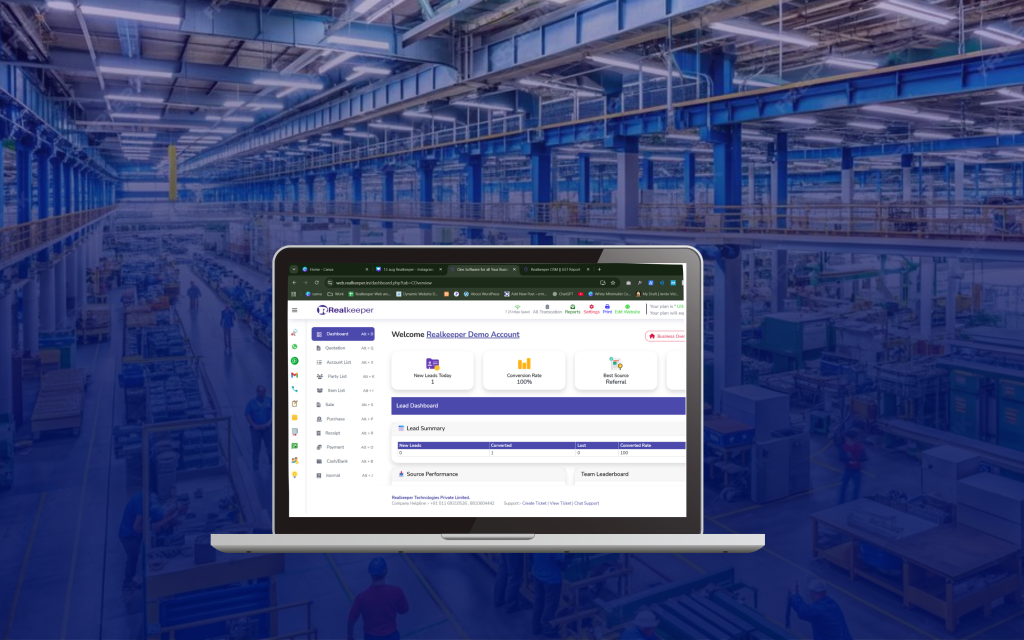
What Makes ERP Accounting Software “Smart”?
Smart ERP accounting software is designed specifically to handle the complexities of manufacturing finance. It connects financial data with operational activities, allowing businesses to manage their factory finances efficiently.
Key characteristics of smart ERP accounting software include:
- Real-time data integration
- Automated accounting processes
- Accurate cost tracking
- Centralized financial management
- Actionable financial insights
This smart approach eliminates guesswork and brings clarity to factory finances.
How Smart ERP Accounting Software Transforms Factory Finance
1. Real-Time Financial Visibility
Smart ERP systems provide instant access to financial data related to purchases, production costs, sales, and expenses. Factory owners and managers can monitor cash flow and financial performance without waiting for month-end reports.
2. Accurate Production Costing
Understanding the true cost of manufacturing a product is essential. ERP accounting software captures material consumption, labor costs, and overheads at every production stage, helping manufacturers calculate accurate product costs and set profitable pricing.
3. Integrated Inventory & Finance Control
Inventory has a direct impact on factory finance. Smart ERP accounting software automatically updates stock values with every transaction, ensuring accurate inventory valuation and preventing financial mismatches.
4. Automated Accounting & Compliance
Automation reduces dependency on manual entries and spreadsheets. ERP accounting software automatically records transactions, generates ledgers, and supports tax compliance, reducing errors and saving time.
5. Cash Flow Management
Manufacturers often face cash flow challenges due to delayed payments and high operating costs. ERP accounting software helps track receivables, payables, and expenses in real time, enabling better cash flow planning.
Benefits of Smart ERP Accounting Software for Manufacturers
Better Financial Decision-Making
With real-time reports and financial dashboards, management can make informed decisions related to production planning, cost reduction, and investment.
Improved Operational Efficiency
When accounting, inventory, and production data are connected, workflows become smoother. Teams spend less time reconciling data and more time focusing on growth.
Reduced Financial Risk
Accurate data, timely reporting, and compliance support help reduce financial risks and audit-related issues.
Enhanced Profitability
By controlling costs, reducing wastage, and improving efficiency, smart ERP accounting software directly contributes to higher profit margins.
Role of ERP Accounting in Factory Growth
As factories expand, financial complexity increases. Managing growth with disconnected systems leads to inefficiencies and errors. ERP accounting software scales with business growth, supporting multiple locations, higher production volumes, and complex financial structures.
It ensures that factory finance remains organized, transparent, and controllable at every stage of expansion.
Why Traditional Accounting Systems Fall Short
Traditional accounting tools are not built for manufacturing needs. They lack:
- Integration with production data
- Real-time inventory valuation
- Detailed cost analysis
- Manufacturing-specific financial reports
As a result, factories struggle to gain a clear financial picture, limiting their ability to grow profitably.
Choosing the Right ERP Accounting Software for Your Factory
Before implementing ERP accounting software, manufacturers should evaluate:
- Manufacturing-specific accounting features
- Ease of use for finance and operations teams
- Scalability and flexibility
- Strong reporting and compliance support
The right solution should simplify factory finance rather than complicate it.
Future of Factory Finance with ERP Accounting Software
Modern manufacturing demands speed, accuracy, and transparency. Smart ERP accounting software is shaping the future of factory finance by enabling data-driven decisions and efficient financial control.
Factories that adopt integrated ERP accounting systems gain a competitive edge through better cost management, improved efficiency, and sustainable growth.
Conclusion
Smart ERP Accounting Software has the power to transform factory finance by connecting accounting with manufacturing operations. It brings clarity, control, and confidence to financial management while improving efficiency and profitability.
For manufacturers looking to grow and stay competitive, adopting a smart ERP accounting solution is a strategic step toward long-term success.