
You sent 1,000 brackets for powder coating on 10 November. Today your supervisor says “about 600 are back,” the job worker says everything was returned, and your stock register shows zero. Job work inventory tracking closes that gap: it keeps material you’ve sent out visible, counted and on the GST clock until it returns.
Full disclosure: we build Realkeeper, a Delhi-based cloud ERP and CRM with manufacturing, GST billing and subcontract management. We’ve included it in the comparison and said plainly where another tool fits better. This guide covers the job work inventory tracking cycle, the GST rules, a register template you can copy, software options and costs.
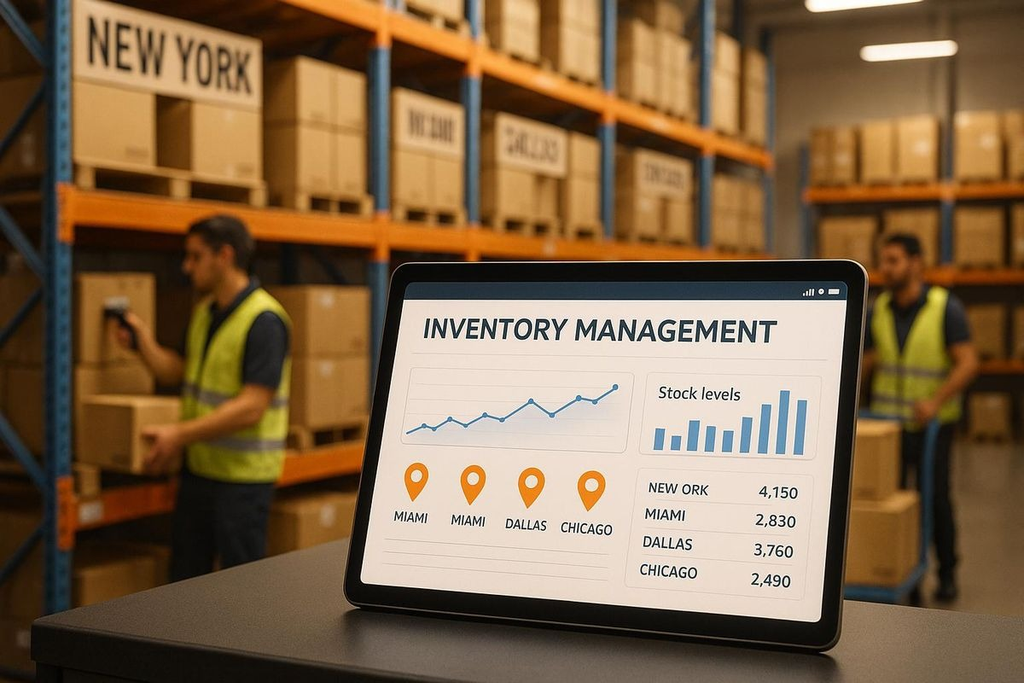
What is job work inventory tracking?
Job work inventory tracking is the practice of recording every item you send to a job worker, what comes back, what is lost in processing and what is still pending, so that stock, cost and GST records agree. Under GST the goods stay yours while they sit in someone else’s workshop, so they belong on your books, not in a blind spot.
| Term | Meaning | Why it matters for job work inventory tracking |
| Principal | The registered business that owns the goods and sends them out | You carry the compliance and the stock risk |
| Job worker | The person who treats or processes goods that belong to the principal | Their workshop becomes a stock location |
| Job work challan | The document that moves goods out, carrying the particulars that Rule 45(2) ties to Rule 55 | Every return must close against the right challan |
| Stock at job worker | Material you own that is physically at the job worker | Needs its own ageing, quantity and value |
| ITC-04 | The return declaring goods sent to and received from job workers | Built from your challans, so your register must be clean |
| Deemed supply | The tax consequence if goods don’t return within the time limit | Makes the return clock a financial risk |
Why does job work inventory tracking break down in most factories?
Control slips at five predictable points: nobody ages the stock, partial returns hit the wrong challan, wastage is never agreed, challans don’t match the return, and goods move between job workers without a record. Spreadsheets fail at exactly these points, because each one needs a link between documents.
- No ageing: a lot that left in November 2026 looks the same as one that left last week, until the one-year limit passes
- Partial returns: 600 of 1,000 come back, someone books them against an older open challan, and both balances go wrong
- Unagreed wastage: 15 pieces are “lost in processing” but there’s no tolerance, no record and no cost
- Mismatched paperwork: the job worker’s challan, your challan and the conversion-charges invoice quote three different numbers
- Job worker to job worker: goods go from the plater to the heat-treater, and your books still show them at the first one
Our view: if your factory sends out more than a handful of challans a month, a plain spreadsheet has stopped being a register for job work inventory tracking and become a guess.
How does job work inventory tracking work, step by step?
The cycle runs from challan to reconciliation: issue the challan, move the stock, track it at the job worker, receive it back, close the challan, collect the invoice and reconcile. Each step should update the same record.
- Issue the job work challan. Record item, HSN, quantity, value, job worker, process and the date the goods leave.
- Raise the e-way bill if required. It’s needed above ₹50,000 as a rule, and some states and inter-state moves need one regardless of value.
- Move stock to the job worker’s location. The quantity leaves your store but stays on your books under a separate location.
- Start the return clock. Inputs have one year and capital goods three, counted from dispatch.
- Receive goods back, in full or in parts. Close each receipt against the challan it belongs to, and record any wastage.
- Match the conversion-charges invoice. The job worker’s invoice should quote the original challan number.
- Reconcile and report. Pending quantity should equal sent minus received minus agreed wastage, and the same data feeds ITC-04.
Manufacturing scrap tracking software is the natural partner for job work inventory tracking, because wastage at the job worker is where most unexplained loss hides.
What GST rules shape job work inventory tracking?
Four rules decide what your system must track: the return time limits in Section 143, the challan under Rule 45, the e-way bill, and the ITC-04 return. The framework sits in the CGST Act and Rules, and you can read the text on the CBIC tax information portal.
| Rule | What it says (verify before acting) | What your tracking must capture |
| Return time limits (Section 143) | Inputs must return or be supplied from the job worker’s premises within one year, and capital goods within three. Moulds, dies, jigs, fixtures and tools have no limit. The Commissioner can extend the period for sufficient cause. | Dispatch date and days left per challan, by goods type |
| Deemed supply | Goods not returned in time are treated as supplied from the date of dispatch, with GST and interest payable. | Alerts well before the deadline |
| Challan (Rule 45) | Goods move on a challan carrying the Rule 55 particulars, without tax being charged on the movement. | One continuous challan series, job worker details and GSTIN |
| E-way bill | Generally required above ₹50,000, with some states and inter-state job work needing one regardless of value. | A link between challan and e-way bill number |
| ITC-04 | Above ₹5 crore turnover: half-yearly, due 25 October and 25 April. Up to ₹5 crore: annually, due 25 April. | Sent, received and transferred quantities per period |
| Job worker’s charges | The job worker raises a GST invoice for the processing charges when goods return. | Invoice reference to the original challan |
A caution: online guides disagree on ITC-04 frequency, and some state it the other way round. The turnover split above follows TaxGuru’s reproduction of the rule text and Tally’s job work guide. Confirm your own frequency on the GST portal or with your CA. The ICAI’s revised handbook on job work, covered by JurisHour, is a reliable reference for the full provisions.
What should a job work inventory tracking register record?
A usable job work inventory tracking register holds one row per challan line, with sent, received, wasted and pending quantities, a due-by date and a status. You can start with this layout in Excel and move it into software later.
| Field | Illustrative example |
| Challan number and date | JW-014, 10 November 2026 |
| Job worker and GSTIN | Sharma Powder Coating, with GSTIN if registered |
| Item, HSN and process | MS bracket, powder coating |
| Quantity sent and value | 1,000 pieces, valued at your cost |
| Goods type | Input (one-year limit) |
| Due-by date | 10 November 2027 |
| Receipts | 600 on 5 December; the next lot is pending |
| Agreed wastage | 15 pieces, with a reason |
| Pending quantity | 385 (sent 1,000, received 600, wasted 15) |
| Conversion invoice reference | Invoice number quoting JW-014 |
| Status | Partially received |
Those eleven fields answer the three questions an auditor asks: what left, what came back and what’s still out. If your current system can’t show pending quantity per challan in under a minute, job work inventory tracking isn’t really in place yet.
Which features should job work inventory tracking software have?
The essentials of job work inventory tracking software are a challan-linked register, partial-receipt handling, return-clock alerts, wastage capture and ITC-04-ready reports. Everything else is secondary until those five work on your own data.
| Feature | What to check | Why it matters |
| Challan-linked register | Every send and return tied to a challan, with job worker master data | Prevents returns landing on the wrong challan |
| Stock at job worker | A separate location with quantity, value and ageing | Keeps owned stock visible |
| Partial receipts | Multiple receipts per challan, with a live pending balance | Real jobs rarely return in one lot |
| Return-clock alerts | Days left, by inputs, capital goods and tools | Avoids deemed-supply surprises |
| Wastage and scrap | Agreed loss per job, with cost and reason | Turns “lost” material into a number |
| Job worker to job worker | Transfers that update location and ITC-04 logic | Matches the physical trail |
| GST documents | Challan, e-way bill, conversion invoice | Avoids double entry |
| ITC-04 reports | Period data by table, exportable | Makes the return a by-product |
| Costing link | Job work charges added to the product cost | Shows true margin |
Excel, accounting software or ERP: which approach fits job work inventory tracking?
Use Excel only at very low volume, accounting software if you mainly invoice, and a manufacturing ERP once job work feeds production, costing and stock. The wrong level either leaves job work inventory tracking manual or buys features you won’t use.
| Approach | Best when | Watch out for |
| Excel register | A few challans a month and one or two job workers | No ageing alerts; partial returns and wastage break it quickly |
| Accounting software with job work vouchers | You invoice, keep stock and file GST in one tool | Job work features often sit in higher editions; check production depth |
| Manufacturing ERP | Job work feeds BOM, production, costing and billing | Needs clean item and BOM data before go-live |
| Enterprise ERP | Several plants and complex planning | Cost and rollout time |
How much does job work inventory tracking software cost in India?
Pricing for job work inventory tracking software ranges from free tiers and open-source options to one-time licences of about ₹16,500 and published ERP bundles from ₹18,000 a year, with many ERPs quoting on request. Implementation and training are often the larger cost.
| Option | Published pricing (verify) | Job work relevance |
| BUSY | Standard edition about ₹16,500 one-time | Job work management with auto account posting and ITC-04 e-return are listed from Standard; Basic omits them |
| TallyPrime | Rental from about ₹750/month or about ₹18,000 one-time (single user); lists vary | Check job work vouchers and ITC-04 reports in your edition |
| Munim GST | Plans vary | Its job work module is a paid add-on, not in the standard plan |
| Realkeeper | Ultimate plan ₹18,000 + 18% GST for the first year, ₹12,000 from the next, 5 users. See Realkeeper pricing | Subcontract management sits in the manufacturing ERP |
| Odoo, ERPNext | Odoo from about ₹580 per user/month; ERPNext free to self-host | Subcontracting modules exist; verify India challan and ITC-04 support |
| OEMup, LastingERP, ERPDrive | Quote or demo based | Vendor pages describe challans, return tracking and ITC-04-ready data |
Prices come from vendor and comparison pages and change often. Get written quotes, and ask whether the job work module, ITC-04 reports and e-way bill are included or add-ons.
Which job work inventory tracking software fits your company?
There’s no single best job work inventory tracking software. Fit depends on whether job work is a side activity or the core of your process, and on how much of production sits in the same system. The names below recur in 2026 vendor and guide material. Treat them as a shortlist, not a ranking, because we haven’t benchmarked these products ourselves.
| Company profile | Names worth shortlisting | What to test first |
| Small unit on accounting software | BUSY Standard, TallyPrime | Partial returns, pending balance and the ITC-04 report |
| MSME manufacturer wanting job work, BOM and billing together | Realkeeper, OEMup, LastingERP | Challan to receipt to cost, on one real job |
| Garment and apparel with per-process job work | ERPDrive Garment Edition | Lot-wise routing and process-wise job workers |
| Business already running Marg | Marg ERP | ITC-04 data generated from challans |
| You are also a job worker for others | Arukz, which covers both sides of the challan | Principal’s challan intake and return challans |
| Technical team with a partner | ERPNext, Odoo | Subcontracting flow and India GST localisation |
How does Realkeeper compare for job work inventory tracking?
Realkeeper is a cloud ERP and CRM for Indian MSMEs whose manufacturing module lists subcontract management with reminders, so it fits factories that want job work inventory tracking connected to production, stock and GST billing. Accounting-led tools and dedicated manufacturing ERPs may go deeper on challan formats and ITC-04 reporting.
Realkeeper’s manufacturing ERP lists BOM, production costing, stock valuation and ageing, batch or lot tracking, subcontract management and a document timeline per transaction. Its production management module adds job cards and work orders, and the same platform runs GST billing with e-invoicing. In Realkeeper’s own guide to scrap tracking, subcontracting tracking is described as recording what you sent, what came back finished and what is missing. The manufacturing billing software page shows the wider setup.
| Factor | Realkeeper | Accounting-led tools (BUSY, TallyPrime, Marg) | Manufacturing ERPs (OEMup, ERPNext, Odoo) |
| Product type | Cloud ERP and CRM with MSME manufacturing | Accounting and billing with inventory | Production-led ERP |
| Best fit | MSME manufacturers on published plans | Traders and small manufacturers | Process-heavy factories |
| Subcontract and job work | Subcontract management with reminders on the Ultimate plan | Job work vouchers and registers; edition-dependent | Subcontract orders linked to BOM components |
| Stock at job worker, with ageing | [Add how stock at the job worker is shown and aged] | Varies by product | Usually a separate location |
| Job work challan and e-way bill | [Add job-work challan format and e-way bill support] | Challan formats common | Varies; verify |
| ITC-04 data | [Add ITC-04 report or export status] | ITC-04 e-return in higher editions (BUSY Standard and above) | Vendors describe ITC-04-ready data |
| Return-deadline alerts | Reminders are listed; [confirm they track the one-year and three-year limits] | Varies | Often built in |
| Wastage at job worker | Tracks sent, returned and missing quantities; see the scrap guide | Limited | Scrap and loss capture common |
| Costing and BOM link | Production costing, BOM and stock valuation on one platform | Limited | Core strength |
| Pricing model | Published bundles; see compare plans | Licence or rental | Per user or quote |
Choose Realkeeper if you are an MSME manufacturer who wants job work, BOM, production costing and GST billing under one login, and you value a published price. Read Realkeeper vs TallyPrime, Busy, Vyapar and Zoho Books for the accounting-tool comparison.
Choose another option if your main need is a challan-and-ITC-04 register on top of existing accounting software, or you need a job-worker-side module. Honest advice: if you send out only a few challans a year, a disciplined Excel register is enough.
How do you choose job work inventory tracking software? Seven checks
- Send a partial lot. Dispatch 1,000 pieces, receive 600 and 400 on different dates, and watch the pending balance after each.
- Check the clock. Confirm it shows days left per challan, split by inputs, capital goods and tools.
- Record wastage at return. See whether stock, cost and the pending balance still reconcile.
- Move goods between job workers. The location and the ITC-04 treatment should follow.
- Create challan and e-way bill from one record. Check the particulars against Rule 55.
- Pull ITC-04 data for a period. Tie it back to your register, line by line.
- Review access and audit trail. Who can edit a challan after dispatch, and is the change logged?
What if you are the job worker?
A job worker should record the principal’s goods as someone else’s stock, never as their own inventory. Log the principal’s challan number, date, items and quantities when material arrives, then issue return challans and a conversion-charges invoice when the work is done. Keeping that record clean protects you in an audit and gives the principal the statement they need for ITC-04. Few tools handle both sides, so ask before you buy.
Frequently asked questions about job work inventory tracking
What is job work inventory tracking?
Job work inventory tracking records every item sent to a job worker, what returns, what is lost in processing and what is still pending. It keeps stock, cost and GST records consistent because the goods remain the principal’s property throughout.
How long can goods stay with a job worker under GST?
Inputs must return or be supplied from the job worker’s premises within one year, and capital goods within three years, counted from dispatch. Moulds, dies, jigs, fixtures and tools have no time limit, and the Commissioner can extend the periods for sufficient cause.
Does stock at a job worker stay in my inventory?
Yes. The goods remain yours legally, so they should stay on your books under a separate location such as “at job worker.” Confirm the exact accounting treatment with your chartered accountant.
When is ITC-04 due?
Businesses with aggregate turnover above ₹5 crore file ITC-04 half-yearly by 25 October and 25 April, and those up to ₹5 crore file annually by 25 April. Some online guides state this differently, so confirm on the GST portal or with your CA.
Can Excel handle job work inventory tracking?
Excel works for job work inventory tracking at a few challans a month. It struggles with partial returns, ageing alerts, wastage and ITC-04 reconciliation, which is where most errors start as volume grows.
Does Realkeeper support job work inventory tracking?
Realkeeper’s manufacturing ERP lists subcontract management with reminders, available on the Ultimate plan. Its public pages don’t describe ITC-04 export or job-work challan formats, so test your own challan cycle during the 7-day free trial.