
Managing inventory is one of the most important parts of running a manufacturing business. From purchasing raw materials to producing finished goods and delivering orders, every stage depends on accurate stock information.
For small and medium-sized manufacturers, inventory management can become difficult when records are maintained through spreadsheets, notebooks, or disconnected software. As the number of products, suppliers, purchases, and customer orders increases, manually tracking everything takes more time and creates more opportunities for mistakes.
This is where Affordable Manufacturing Inventory Management Software can provide a practical solution.
Modern inventory software allows manufacturers to manage stock, purchases, production, sales, and other business activities through a connected system. When cloud capabilities are included, business owners and authorized employees can also access important information from different locations.
However, affordability should not mean compromising on essential functionality. The right software should provide the features a manufacturing business actually needs while remaining simple enough for employees to use every day.
In this guide, we will explore how affordable and cloud-based inventory software can help growing manufacturers improve stock control, reduce manual work, and manage their operations more efficiently.
What Is Manufacturing Inventory Management Software?
Manufacturing inventory management software is a digital system designed to help manufacturers monitor and control inventory throughout the complete production cycle.
A manufacturing business usually manages several types of inventory, including:
- Raw materials
- Components
- Work-in-progress items
- Finished goods
- Packaging materials
- Spare parts
- Consumable items
These materials move through different stages before reaching the customer.
For example:
Purchase → Raw Material → Production → Finished Goods → Sales → Delivery
An inventory management system helps record these movements and provides better visibility into what is available at each stage.
Unlike a basic stock management tool, manufacturing-focused software can connect inventory with production, purchasing, sales, billing, and accounting.
For growing businesses, this connected approach can be much more useful than maintaining separate spreadsheets for every department.
Why Are Manufacturers Moving Toward Affordable Software?
Manufacturing software was once considered something mainly used by large companies with large IT budgets.
Today, small and medium-sized manufacturers also need digital tools to remain organized and competitive.
However, many MSMEs still hesitate to adopt software because they assume that ERP or inventory systems are:
- Too expensive
- Too complicated
- Difficult to implement
- Difficult for employees to learn
- Designed only for large companies
Cloud-based business software has changed this situation.
Manufacturers can now choose solutions that focus on practical business requirements instead of paying for unnecessary complexity.
Affordable Manufacturing Inventory Management Software can help a growing business move from manual inventory management to a more structured digital workflow without making the transition unnecessarily complicated.
The key is to choose software based on business requirements rather than simply choosing the cheapest option.
1. Centralize Your Inventory Information
One of the biggest problems with manual inventory management is that information can become scattered.
A business may maintain one Excel file for raw materials, another for finished goods, and separate records for purchases and sales.
This creates an obvious question:
Which file contains the latest information?
A centralized inventory system keeps important stock information in one place.
Employees can work with organized records instead of searching through multiple files.
Depending on the software, manufacturers may be able to manage information such as:
- Product details
- Stock quantities
- Units of measurement
- Purchase transactions
- Sales transactions
- Stock movements
- Production records
- Warehouse information
This creates a clearer overall picture of inventory.
2. Manage Raw Materials More Efficiently
Raw materials are the foundation of manufacturing.
If an important material is unavailable, production may slow down or stop. At the same time, purchasing excessive quantities can increase storage costs and unnecessarily block working capital.
Inventory management software can help manufacturers monitor the availability and movement of raw materials.
For example, a manufacturer producing furniture may need:
- Wood
- Adhesives
- Screws
- Hardware
- Packaging materials
Instead of manually checking multiple registers, the business can maintain these items within a structured inventory system.
Affordable Manufacturing Inventory Management Software can make it easier to understand current stock levels and previous purchase activity before placing new orders.
3. Connect Inventory With Production
Inventory management becomes much more useful when it is connected with production.
Consider a simple example.
A manufacturer has 1,000 units of raw material available. During production, 250 units are consumed.
The inventory records should reflect the consumption so that the business knows what remains available.
Similarly, when production is completed, finished goods should be added to inventory.
The complete flow can look like this:
Raw Material → Consumption → Production → Finished Goods
A connected system reduces the need for employees to manually update several records after every production activity.
This can improve visibility between the warehouse and production team.
4. Improve Finished Goods Management
Finished goods are products that are ready for sale or delivery.
If finished-goods inventory is not updated correctly, sales teams may have difficulty knowing what is actually available.
This can result in problems such as:
- Promising unavailable products
- Delayed deliveries
- Incorrect stock commitments
- Emergency production
- Customer dissatisfaction
With Affordable Manufacturing Inventory Management Software, businesses can maintain more organized records of finished products.
When sales transactions are connected with inventory, stock levels can also be easier to monitor after products are sold.
This creates a smoother relationship between production, inventory, and sales.
5. Reduce Manual Inventory Work
Manual data entry consumes valuable employee time.
Every purchase, production transaction, stock adjustment, or sale may require employees to update multiple records.
The more transactions a business handles, the more difficult this process becomes.
Digital inventory management can reduce repetitive work by connecting related transactions.
For example:
Purchase → Stock Update
Production → Material Consumption + Finished Goods
Sales → Stock Reduction
This does not eliminate the need for employees to verify information, but it can reduce unnecessary repetitive data entry.
As a result, employees can spend more time on productive activities instead of maintaining multiple spreadsheets.
6. Make Purchasing Decisions With Better Information
Purchasing decisions have a direct impact on manufacturing costs and production continuity.
Ordering too little material can create production delays.
Ordering too much can increase inventory holding costs.
This is why manufacturers need visibility into their existing inventory before making purchasing decisions.
Affordable Manufacturing Inventory Management Software can help businesses review current stock and transaction history in one place.
For example, management can check:
- Current stock
- Previous purchases
- Material consumption
- Supplier transactions
- Product movement
- Production requirements
This information can support more informed purchasing decisions.
7. Improve Stock Accuracy
Inventory accuracy is critical for manufacturing businesses.
Imagine the system shows that 500 units are available, but the warehouse physically contains only 420.
That difference of 80 units can affect:
- Production planning
- Sales commitments
- Purchasing
- Customer orders
- Business reporting
A digital inventory system can help maintain transaction-based stock records.
When purchases, sales, production, and adjustments are recorded properly, businesses can maintain more reliable inventory information.
Of course, software alone cannot guarantee perfect stock accuracy. Physical verification, proper processes, and employee discipline are still important.
8. Access Inventory Information Through the Cloud
Cloud technology is one of the most useful developments for growing businesses.
Traditional software may depend heavily on a particular computer or office system.
Cloud-based software can allow authorized users to access business information through supported devices and an internet connection.
This can be particularly useful for business owners and managers who are not always present at the manufacturing facility.
For example, an owner may want to check inventory while:
- Visiting a supplier
- Travelling
- Working from another office
- Meeting a customer
- Reviewing business operations remotely
With cloud-based access, important information does not have to remain limited to one physical computer.
This flexibility is one of the reasons businesses are increasingly considering Affordable Manufacturing Inventory Management Software with cloud capabilities.
9. Connect Purchases, Inventory, and Sales
Manufacturing inventory is directly affected by both purchases and sales.
When materials are purchased, inventory increases.
When materials are consumed, raw-material stock decreases.
When finished goods are produced, finished-goods stock increases.
When products are sold, finished-goods stock decreases.
This creates a connected business flow:
Purchasing → Inventory → Production → Finished Goods → Sales
When these processes are managed separately, employees may need to enter the same information multiple times.
An integrated system can reduce this dependency and provide better visibility across departments.
10. Support Better Production Planning
Production planning depends heavily on inventory availability.
Before starting production, manufacturers need to know whether required materials are available.
For example, suppose a company receives an order for 500 finished products.
The production team needs to understand:
- What materials are required?
- How much material is available?
- What needs to be purchased?
- What is already in production?
- How much finished stock is available?
When inventory and production information are connected, planning becomes easier.
This is particularly valuable for growing businesses where production volumes and customer orders are increasing.
11. Manage Multiple Products and Stock Locations
As a manufacturing business grows, managing a larger number of products can become difficult.
A company may have:
- Different product categories
- Multiple sizes
- Different models
- Different grades
- Multiple warehouses
- Separate storage areas
Using notebooks or basic spreadsheets for all of these details can quickly become confusing.
Manufacturing inventory software can help organize product information and stock records in a structured manner.
For businesses with multiple storage locations, centralized inventory visibility can also help management understand where stock is available.
12. Keep Better Records of Inventory Movement
Knowing the current stock quantity is useful, but understanding how that stock changed can be even more important.
Businesses may need to review:
- When stock was purchased
- When materials were consumed
- When products were produced
- When goods were sold
- When stock was adjusted
- Which transactions affected inventory
A proper transaction history makes it easier to investigate discrepancies and understand inventory movement.
This creates greater transparency within day-to-day operations.
What Makes Manufacturing Inventory Software Affordable?
The word “affordable” should not simply refer to a low subscription price.
For a business, software is truly affordable when its overall value justifies the investment.
Manufacturers should consider:
Implementation Cost
Is the software easy to start using, or does implementation require a large technical investment?
Training Requirements
Can employees understand the system without extensive training?
Scalability
Can the software continue supporting the business as transaction volumes increase?
Integration
Can inventory connect with purchasing, sales, production, billing, and accounting?
Cloud Access
Can authorized users access information when working from different locations?
Support
Is reliable customer support available when employees need assistance?
Considering these factors can help businesses evaluate the actual value of Affordable Manufacturing Inventory Management Software instead of comparing prices alone.
What Features Should Manufacturers Look For?
Before selecting inventory software, manufacturers should create a list of their actual requirements.
Some important capabilities include:
Inventory Management
The system should help track raw materials, finished goods, stock movements, and available quantities.
Production Management
Inventory should connect with production activities and material consumption.
Purchase Management
The software should help maintain purchase records and supplier information.
Sales Management
Sales transactions should connect with inventory to maintain more accurate stock levels.
GST Billing
For businesses operating in India, GST-compliant billing can be an important requirement.
Reporting
Useful reports can help management understand inventory, purchases, sales, production, and financial performance.
User Access
Businesses should be able to control who can access and manage different types of information.
Cloud Access
Cloud functionality can provide greater flexibility for businesses with remote or multi-location operations.
Affordable Does Not Mean Basic
One common misunderstanding is that affordable software must have limited capabilities.
That is not necessarily true.
Modern cloud solutions can provide a combination of affordability, accessibility, and useful business functionality.
For a small manufacturer, the ideal system may not be the most expensive ERP available.
Instead, it may be a platform that provides the right combination of:
Inventory + Production + Purchasing + Sales + Billing + Accounting
The objective should be to simplify business management rather than add another complicated layer to daily operations.
Cloud-Based Inventory Software vs Excel
Excel remains a useful tool for many businesses, especially for basic calculations and small datasets.
However, manufacturing inventory becomes increasingly complex as the business grows.
| Excel-Based Management | Cloud Inventory Software |
|---|---|
| Multiple files may be required | Centralized system |
| Manual updates are common | Connected transactions |
| Sharing can become difficult | Easier authorized access |
| Version conflicts can occur | Centralized information |
| Limited process integration | Can connect multiple business functions |
| Reporting may require manual work | Structured business reports |
The right choice depends on the size and requirements of the business.
For manufacturers handling increasing transactions, moving toward Affordable Manufacturing Inventory Management Software can provide better long-term organization.
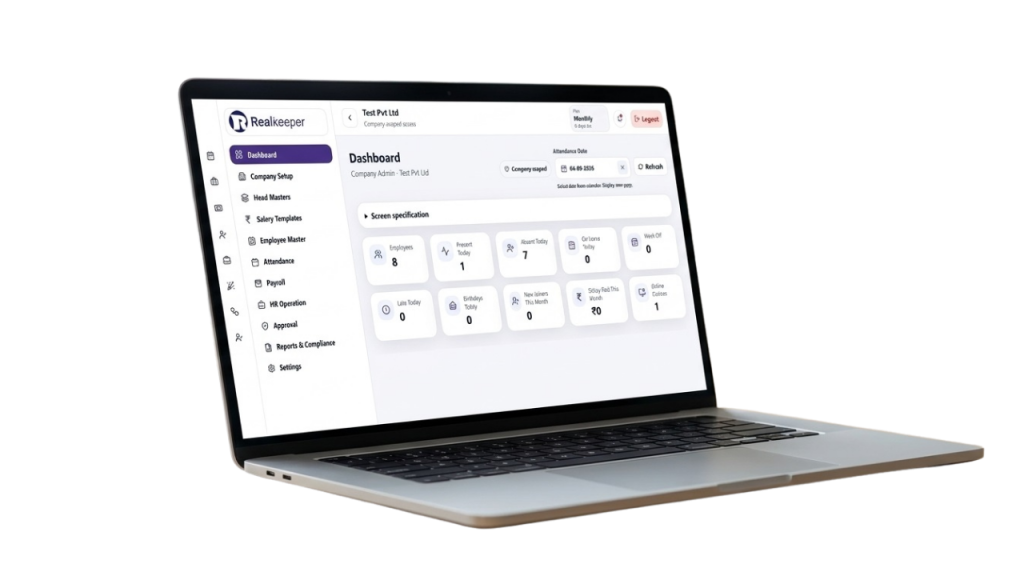
How RealKeeper Helps Manufacturers Manage Inventory
RealKeeper is designed as an integrated business management platform for manufacturers and other growing businesses.
Its manufacturing capabilities connect areas such as:
BOM → Production → Purchasing → Inventory → Sales → Accounting
This connected approach can help businesses reduce dependence on separate tools for different departments.
Manufacturers can manage inventory alongside other important business activities instead of treating stock management as an isolated process.
For businesses looking for Affordable Manufacturing Inventory Management Software, an integrated solution can be especially useful because inventory information becomes part of the wider business workflow.
This can help management maintain better visibility over operations while reducing unnecessary manual coordination between departments.
Who Can Benefit From This Type of Software?
Cloud-based manufacturing inventory software can be useful for:
- Small manufacturing businesses
- MSMEs
- Growing manufacturing units
- Product manufacturers
- Component manufacturers
- Industrial suppliers
- Businesses managing multiple products
- Manufacturers moving away from Excel
- Businesses with multiple stock locations
The exact requirements will depend on the manufacturing process, number of products, transaction volume, and number of employees.
How to Choose the Right Software for Your Business
Choosing software simply because it has a long list of features is not enough.
Start by identifying the problems your business currently faces.
Ask questions such as:
Are we losing track of raw materials?
Are inventory records frequently inaccurate?
Do production and warehouse teams have the same information?
Are employees entering the same data multiple times?
Is it difficult to know current finished-goods stock?
Do managers need remote access to business information?
Once these problems are identified, compare software based on how effectively it can solve them.
A solution that fits your actual workflow will usually provide more value than software selected only because it has the largest feature list.
The Future of Manufacturing Inventory Management
Manufacturing is becoming increasingly data-driven.
Businesses are no longer competing only on production capacity. They are also competing on how efficiently they manage resources, inventory, costs, customer orders, and information.
Cloud-based systems are making digital business management more accessible to smaller manufacturers.
In the future, manufacturers will increasingly need connected systems that bring production, inventory, purchasing, sales, and accounting together.
For growing MSMEs, adopting the right technology early can create a stronger foundation for expansion.
Final Thoughts
Inventory management is not simply about counting products.
It is about understanding the movement of materials and products throughout the entire manufacturing process.
From purchasing raw materials to production, finished goods, sales, and accounting, every stage affects inventory.
Affordable Manufacturing Inventory Management Software can help growing manufacturers organize these processes through a centralized and connected system.
Cloud capabilities add another level of flexibility by allowing authorized users to access important business information from different locations.
However, the best software is not necessarily the cheapest or the one with the most features.
The right solution should be affordable, easy to use, scalable, connected, and aligned with your actual manufacturing workflow.
For manufacturers looking to move beyond spreadsheets and disconnected tools, investing in the right cloud-based inventory solution can be an important step toward better stock control, smoother operations, and sustainable business growth.